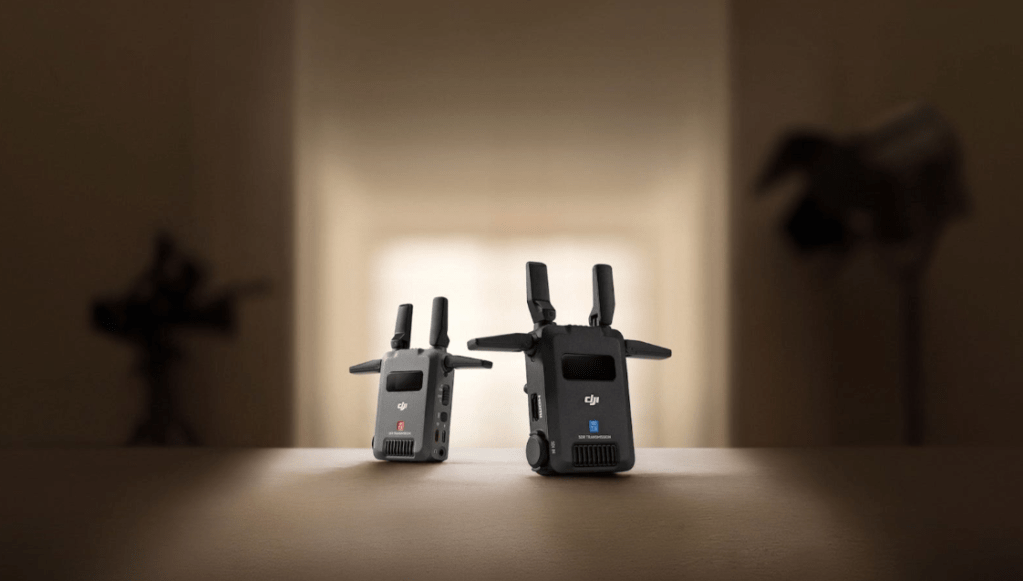
The DJI SDR Transmission is a cutting-edge wireless video system designed to enhance on-set efficiency and collaboration. Here’s a breakdown of its key features and benefits:
JOYSONG Cube Rower: Versatile Home Fitness Solution
Key Features:
- Advanced SDR Technology: Employs Software Defined Radio (SDR) technology for superior signal stability and interference resistance.
- Low Latency: With a minimal latency of just 35ms, it ensures smooth and real-time video transmission, crucial for accurate monitoring and decision-making.
- Multiple Monitoring Options: Supports simultaneous output of three SDR signals and two Wi-Fi signals, allowing for various monitoring setups (monitors, smartphones, tablets).
- Metadata Transmission: Transmits metadata from mainstream cinema cameras like ARRI and RED, providing essential shooting information to the director and DIT.
- Two-Way Communication: Enables real-time communication between the cinematographer and director or client, streamlining workflow.
- Compact and Lightweight Design: Designed for portability and ease of use on location.
Here are some of the pros and cons of the DJI SDR Transmission Wireless:
Pros of DJI SDR Transmission
- High-quality video transmission: Delivers stable 1080p/60fps video with low latency (35ms) and high bitrate (up to 20Mbps).
- Long range: Can transmit up to 3 kilometers (1.8 miles) in challenging environments.
- Strong anti-interference: Automatically hops between 2.4GHz, 5.8GHz, and DFS frequency bands for stable transmission.
- Multiple monitoring options: Offers SDI/HDMI outputs for monitors, and Wi-Fi or USB-C connections for smartphones and tablets.
- Broadcast mode: Allows for unlimited receiver connections for collaborative work.
- Metadata support: Transmits camera metadata for efficient post-production.
Cons of DJI SDR Transmission
- Cost: Compared to traditional wireless video systems, the DJI SDR Transmission is a premium product.
- Size and weight: While compact, it might still be considered bulky for some applications.
- Battery life: Although not specified in detail, battery life can be a factor for extended shoots.
- Wi-Fi limitations: While convenient, Wi-Fi might not offer the same reliability and video quality as the core SDR transmission.
Pros of Wi-Fi in the System
- Convenience: Allows for easy monitoring on smartphones or tablets.
- Cost-effective: Eliminates the need for additional receivers for some users.
Cons of Wi-Fi in the System
- Lower quality: Compared to SDR, Wi-Fi typically offers lower video quality and higher latency.
- Limited range: Wi-Fi has shorter range and is more susceptible to interference.
- Reliability: Wi-Fi can be less reliable than SDR, especially in challenging environments.
Conclusion
The DJI SDR Transmission is a powerful tool for filmmakers and videographers who demand high-quality, reliable wireless video transmission. While Wi-Fi offers convenience for certain use cases, the core strength of the system lies in its SDR technology.
Watch videos:-
Most views blog:-
Neakasa M1: Open-Top Self-Cleaning Cat Litter Box
ForgedAir: The most comfortable and clearest speaking respirator in the world.
LOOI: Turn Your Smartphone into a Desktop Robot!
HERO: Best Carbon-Fiber Electric All-Terrain Bike
15 Amazing New Inventions That Are At Another Level
XbotGo Chameleon Al-Powered Sports Tracking Phone Mount
 Gadgets Hub
Leave a comment